|
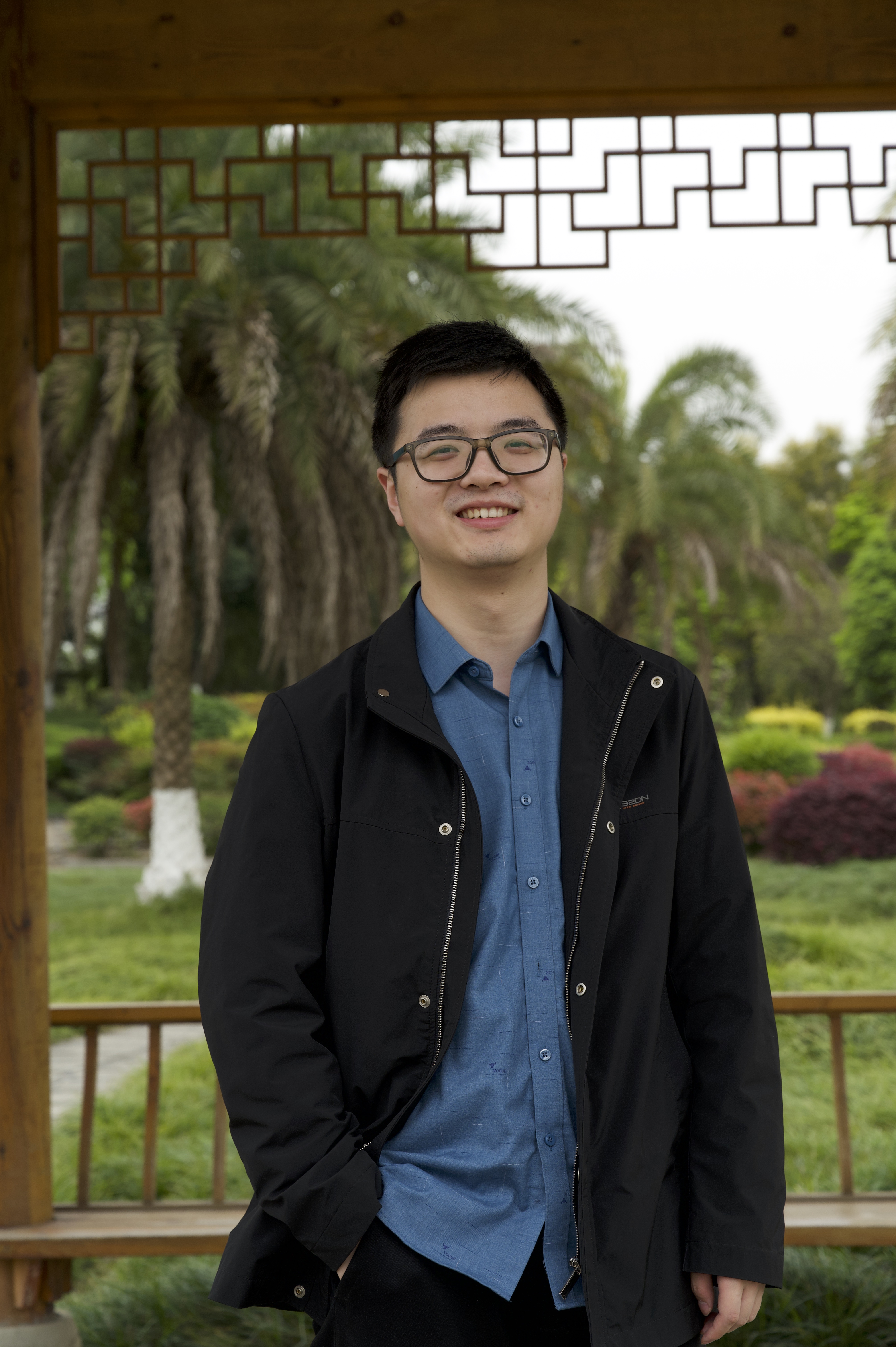
Currently, I am a Ph.D. student at Texas A&M University, supervised by Prof. Xiaoning Qian. My research interests include but are not limited to probabilistic modeling, causality, and LLM reasoning. Before that, I obtained the master's (supervised by Prof. Fan Zhou and Prof. Ting Zhong) and bachelor's degrees in School of Information and Software Engineering from University of Electronic Science and Technology of China (UESTC) in 2023 and 2020, repectively.Email: {FirstName}{LastName} AT tamu DOT edu / Google Scholar / Github |
|
|
|
|
|
|
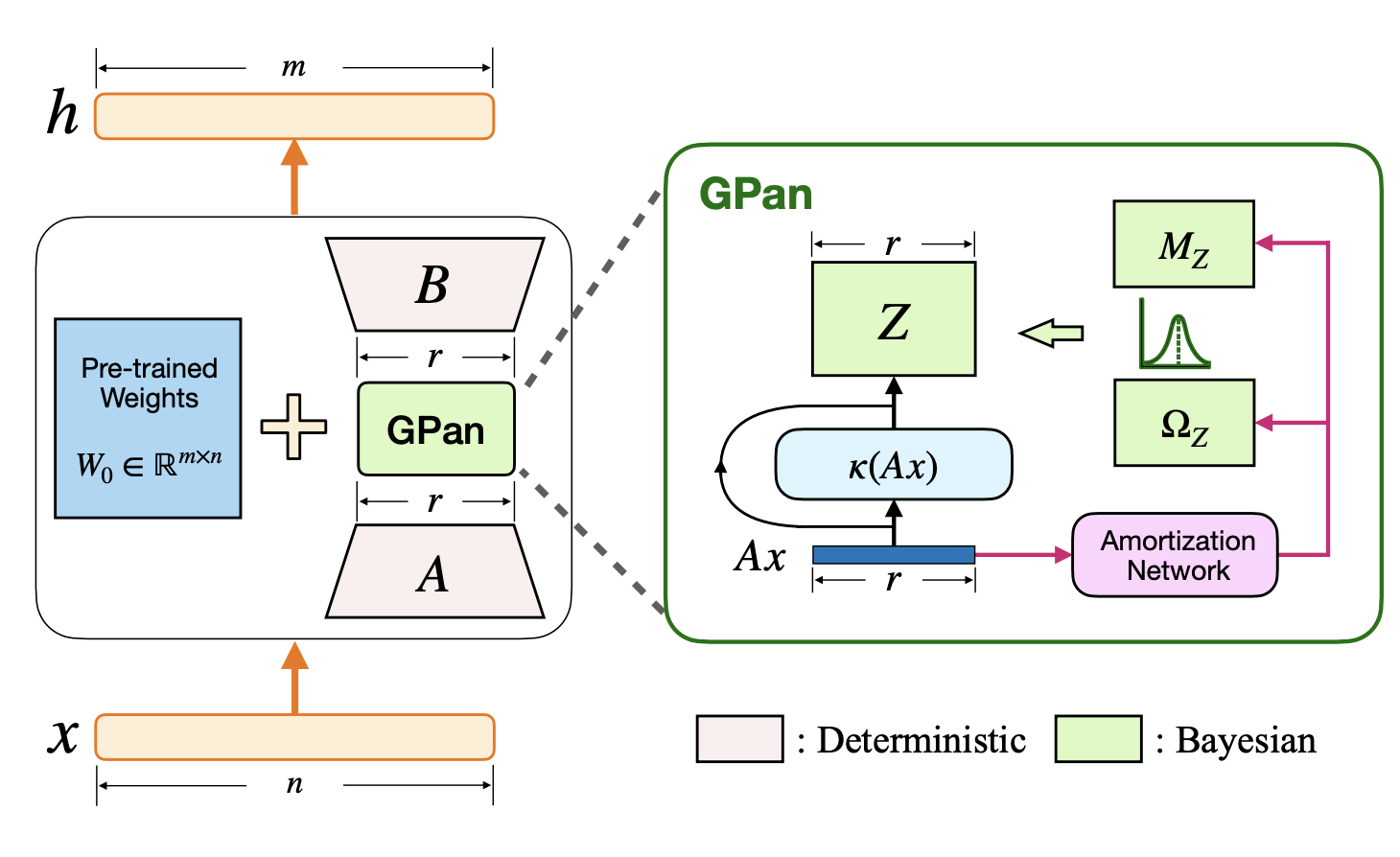
GPan-LoRA: Gaussian Process Amortized Networks for Bayesian Low-Rank Adaptation in Large Language Models
Weifeng Zhang*, Wenyuan Zhao*, Amir Hossein Rahmati, Yucheng Wang, Zhiyuan Wang, Chao Tian, Xiaoning Qian ICML 2026. Area: Bayesian Low-Rank Adaptation, Gaussian Processes, and Uncertainty Quantification. Principled uncertainty quantification is essential for trustworthy fine-tuning of large language models, especially under distribution shift. We propose GPan-LoRA, a scalable Gaussian Process-based Bayesian LoRA framework that integrates sparse Gaussian Process approximations with amortized variational inference. By preserving Bayesian function-space prior and posterior semantics within the low-rank adaptation space, GPan-LoRA achieves calibrated uncertainty estimates while maintaining parameter-efficient fine-tuning and competitive task performance. |
|
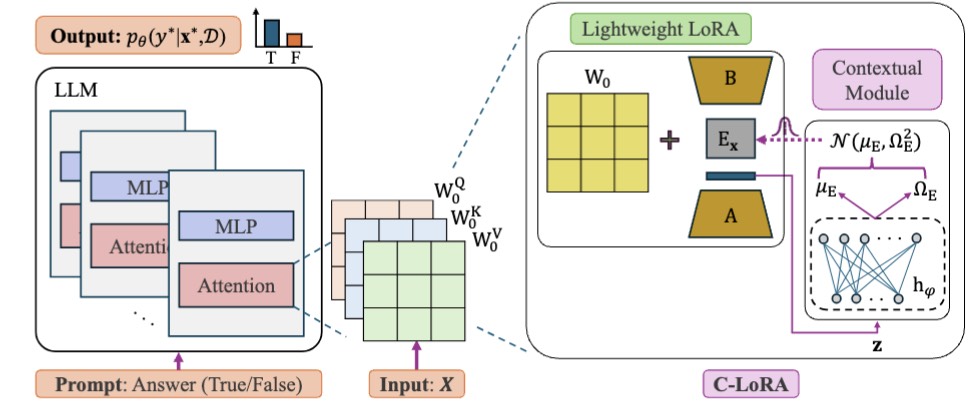
C-LoRA: Contextual Low-Rank Adaptation for Uncertainty Estimation in Large Language Models
Amir Hossein Rahmati, Sanket Jantre, Weifeng Zhang, Yucheng Wang, Byung-Jun Yoon, Nathan M. Urban, Xiaoning Qian NeurIPS 2025. Area: Low-Rank Adaptation, Uncertainty Quantification, and Probabilistic Modeling. Low-Rank Adaptation (LoRA) enables parameter-efficient fine-tuning of large language models, but often yields overconfident predictions in data-scarce few-shot settings. We propose C-LoRA, a contextual uncertainty-aware LoRA framework that develops lightweight, data-dependent LoRA modules to dynamically adapt uncertainty estimates for each input. By incorporating data-driven contexts into the parameter posteriors, C-LoRA improves calibration, mitigates overfitting, and provides robust uncertainty estimates while preserving efficient fine-tuning. |
|
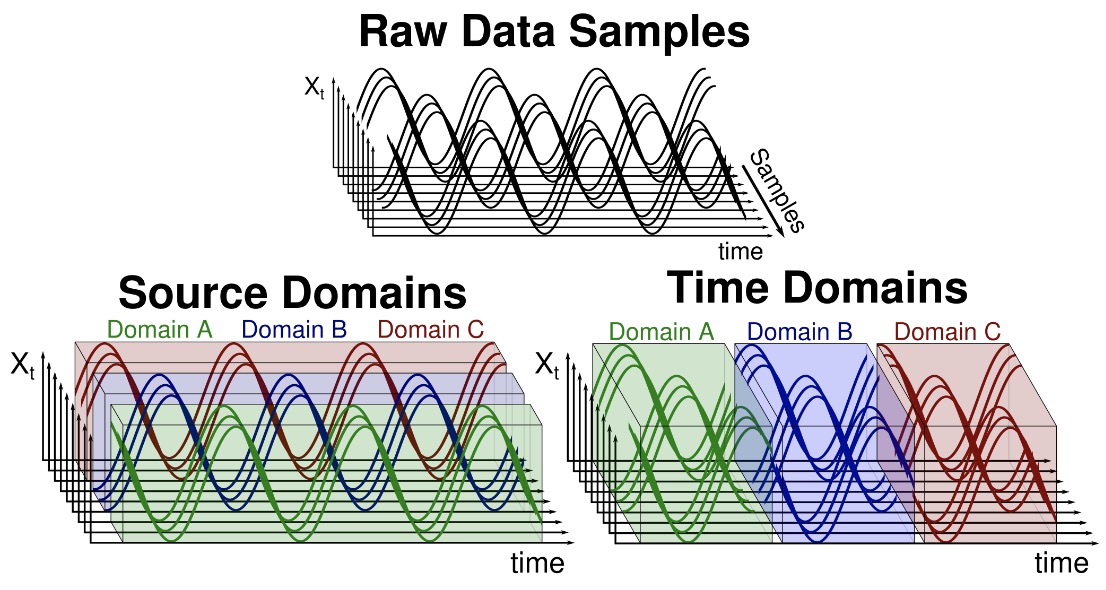
DyCVAE: Learning Dynamic Causal Factors for Non-stationary Series Domain Generalization (Student Abstract)
Weifeng Zhang, Zhiyuan Wang, Kunpeng Zhang, Ting Zhong, Fan Zhou AAAI 2023. Area: Domain Generalization, Representation Learning, and Disentanglement. Learning domain-invariant representations is a major task of out-of-distribution generalization, extending existing generalization methods for adapting non-stationary time series may be ineffective, because they fail to model the underlying causal factors due to temporal-domain shifts except for source-domain shifts. To this end, we propose a novel model DyCVAE to learn dynamic causal factors. |
|
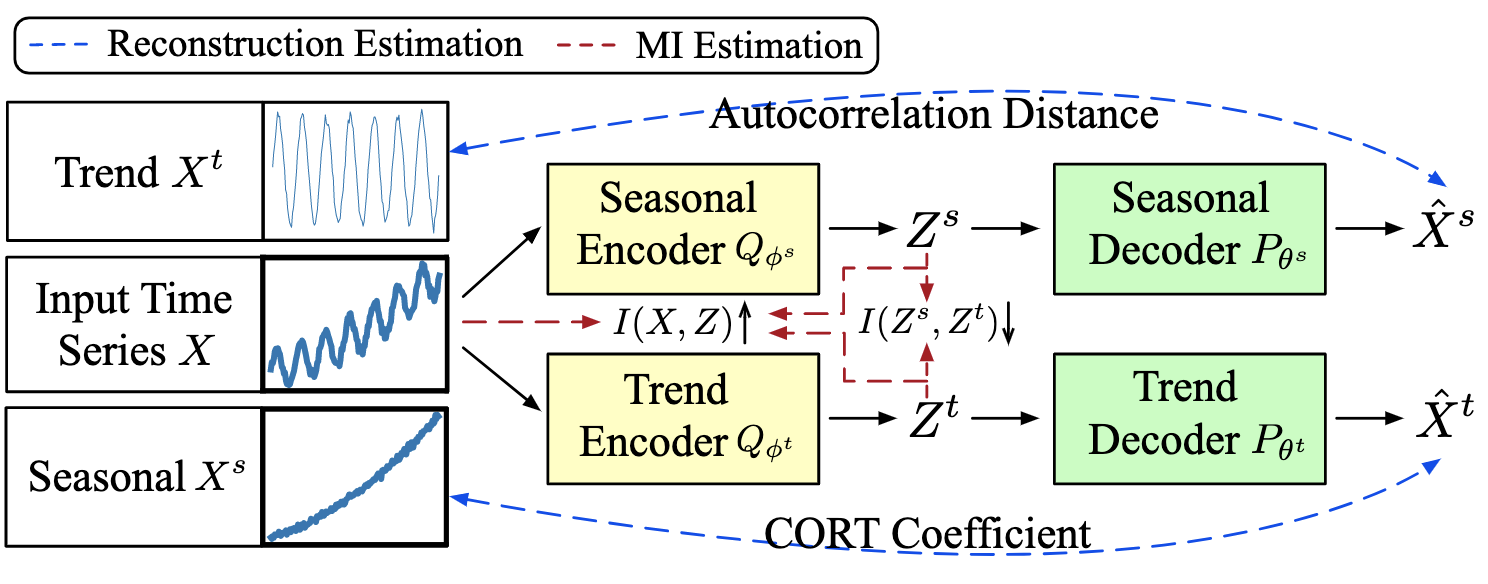
Learning Latent Seasonal-Trend Representations for Time Series Forecasting
Zhiyuan Wang, Xovee Xu, Weifeng Zhang, Goce Trajcevski, Ting Zhong, Fan Zhou NeurIPS 2022. Area: Time Series Forecasting, Representation Learning, and Disentanglement. Motivated by the success of disentangled variational autoencoder in computer vision and classical time series decomposition, we propose LaST that infers a couple of representations that depict seasonal and trend components of time series. Extensive experiments demonstrate its superiority on the time series forecasting task. |
|
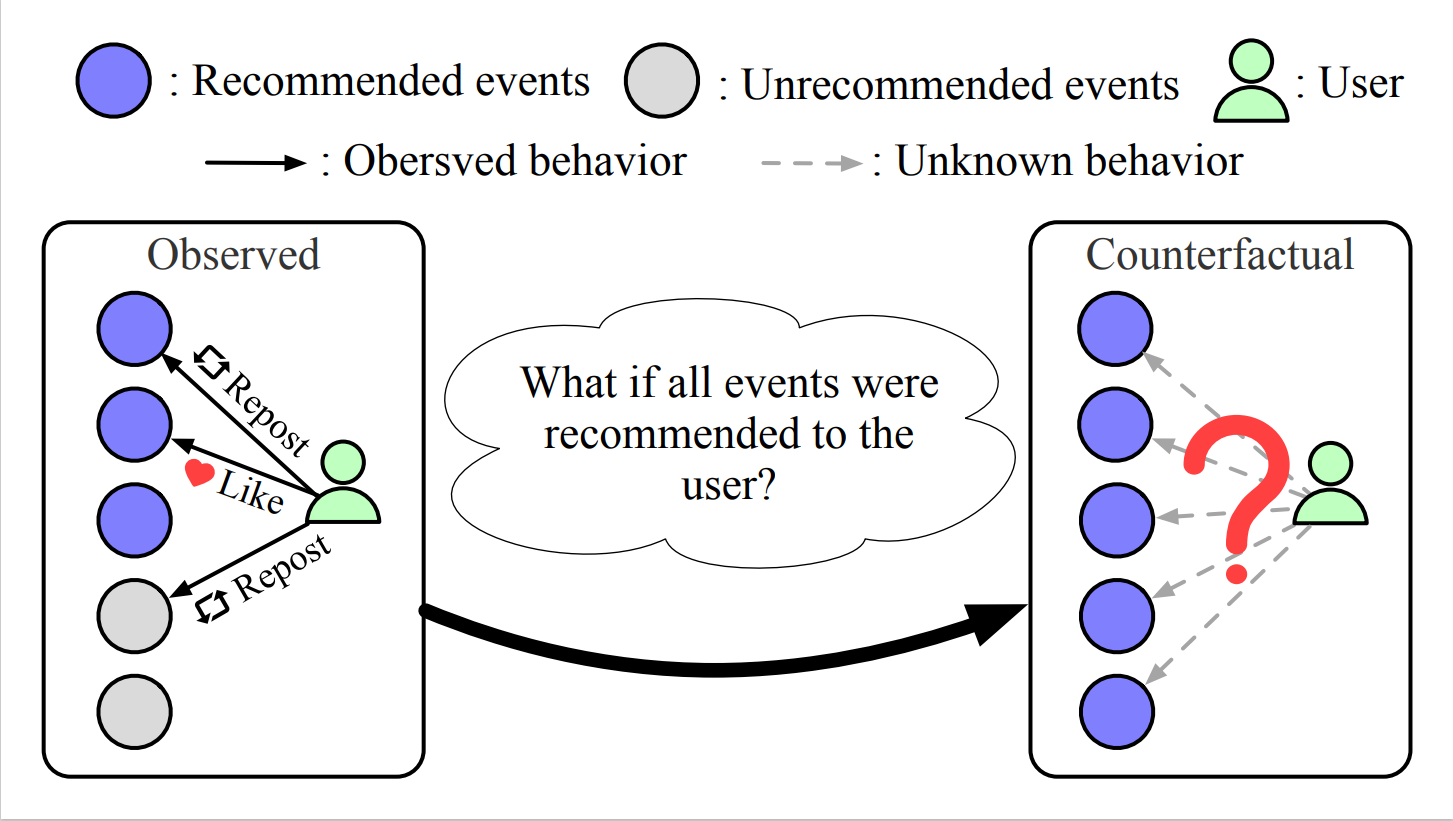
CausalRD: A Causal View of Rumor Detection via Eliminating Popularity and Conformity Biases
Weifeng Zhang, Ting Zhong, Ce Li, Kunpeng Zhang, Fan Zhou INFOCOM 2022. Area: Social Network, Representation Learning, and Causal Inference. We provide a new view of rumor detection through causality, which aims at eliminating popularity and conformity biases in social network. |
|
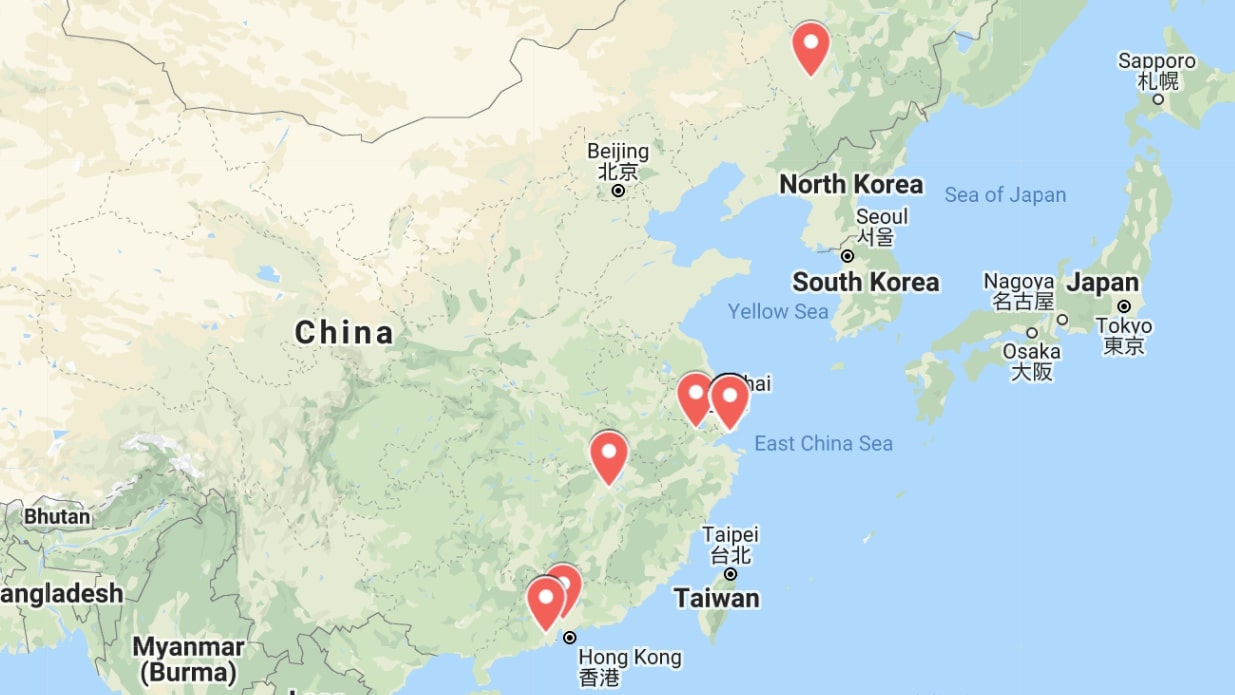
Identifying IP Usage Scenarios: Problems, Data, and Benchmarks
Fan Zhou, Weifeng Zhang, Yong Wang, Ting Zhong, Goce Trajcevski, Ashfaq Khokhar IEEE Network. Area: Network, Resource. We presented and investigated a novel and practical problem called IP usage scenario prediction in the internet community. |
|
|
|
|
|
|
|
Last updated on May, 2026
Template credit to Jon Barron
|